
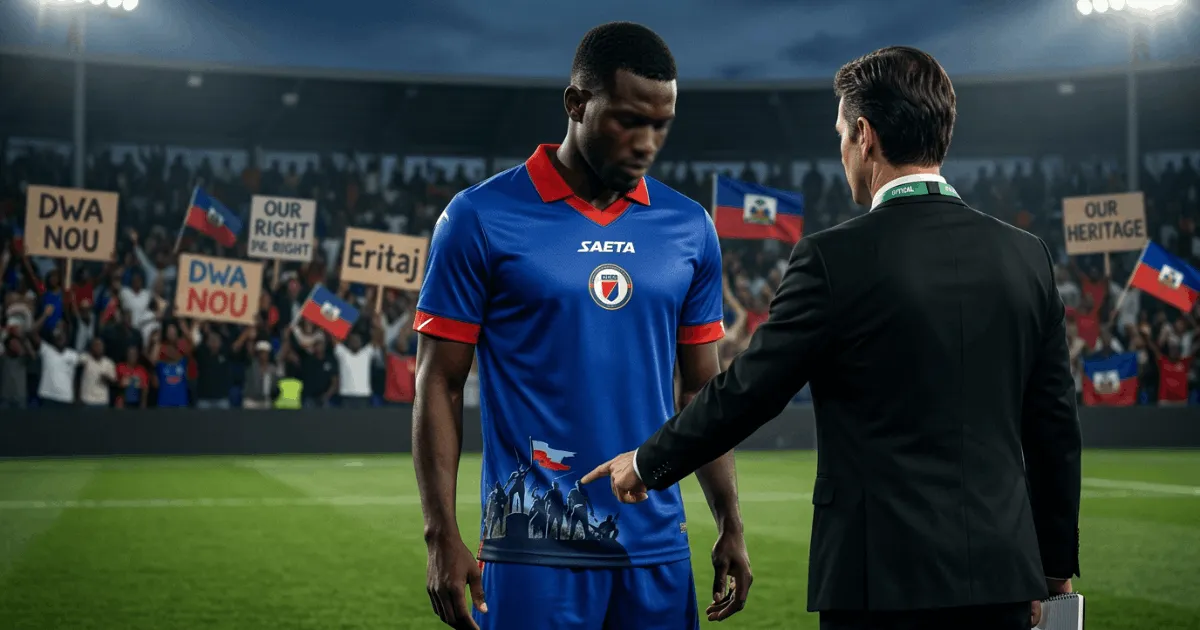
FIFA Forces Haiti to Change Jerseys for World Cup Rules
Table of Contents
Watching international soccer, you expect national pride to show in every detail of a team’s look. But, global bodies like FIFA have strict rules that can go against local traditions. Recently, FIFA made Haiti’s national team change its jerseys.
This move shows the struggle between keeping a unique cultural identity and following strict tournament rules. You might ask why such strict rules are needed in big events. These rules help keep the game clear and consistent for everyone watching.
- International soccer governing bodies maintain strict aesthetic guidelines for all participating nations.
- Standardization requirements often prioritize broadcast clarity and commercial branding over local design preferences.
- National teams must navigate complex administrative hurdles to remain eligible for major tournaments.
- The conflict between team identity and official regulations remains a recurring theme in professional sports.
- Compliance with these mandates is essential for teams aiming to compete on the global stage.
Understanding Why FIFA Forces Haiti to Change Its Jerseys
Why does a national team have to change its jersey before a big tournament? The world of international football has strict rules for looks. FIFA makes sure every game looks fair and professional for everyone watching.
The Regulatory Framework Behind FIFA Kit Standards
The governing body has a detailed manual called the Equipment Regulations. These rules cover everything from logo sizes to number contrast levels. The main goal is broadcast clarity, so players can be easily seen during fast games.
Teams must send their designs months early for testing. If a kit doesn’t meet the rules, the team must change their jerseys before playing. This keeps the focus on the game, not on ads.
Specific Violations Found in the Haitian National Team Kit
For Haiti, the problems were about following the rules. The team had to change their gear because some designs didn’t meet visibility standards. Small changes were needed to meet tournament rules.
These issues often come from where emblems are placed or the colors used. By updating their haiti kits, the federation made sure they could play without penalties. These jerseys show that even small design choices are important in football.
The Impact of Regulatory Compliance on National Teams
When FIFA updates its kit standards, it affects teams worldwide. National teams must quickly update their gear to meet global rules. They need to balance their unique identity with strict sports regulations.
How FIFA Equipment Regulations Affect Branding and Design
Designers face big challenges when making kits for big tournaments. They must carefully choose every detail to meet FIFA’s rules. If they miss a rule, they have to change their design fast.
“The challenge lies in preserving the soul of a nation’s identity while operating within the rigid constraints of a global governing body.”
This tension often leads to simpler designs. Teams must remove complex patterns or symbols that might not meet visibility rules. So, the final kit might not match the original idea.

Financial and Logistical Challenges for Football Federations
Replacing kits quickly is a huge task. Federations must work with manufacturers to make, ship, and distribute thousands of items fast. This can be very expensive, especially for smaller sports groups.
There’s also the problem of managing inventory. Teams often have lots of jerseys that become useless because of rule changes. The table below shows where these challenges hit national teams hard.
| Challenge Area | Operational Impact | Financial Risk |
|---|---|---|
| Design Approval | High creative restriction | Low |
| Manufacturing | Tight production windows | High |
| Distribution | Complex global logistics | Medium |
| Inventory | Wasted stock assets | High |
Teams that can adapt well handle these football challenges better. Those with flexible supply chains do better under FIFA rules. Being able to adapt is key to success in international sports.
Fan Reactions and the Broader Football Controversy
When rules clash with national pride, fans often feel left out. Your team’s uniform is seen as a symbol of heritage. Any change can cause deep frustration. The recent Haiti situation shows how global rules can upset fans’ emotional bond with their national colors.
Balancing Tradition with Tournament Uniformity
The issue is about keeping cultural identity while following tournament rules. FIFA wants specific designs for clear broadcasts, which can change iconic jerseys. Supporters feel these changes erase the kit’s history.
While officials focus on uniformity, fans value their team’s legacy. This gap makes it hard to balance heritage with modern rules. Fans’ wishes to keep traditional designs are seen in online forums.
What This Means for Your Favorite Team’s Identity
Changes suggest a future where team branding might be more standardized. If your team faces similar rules, they might use generic designs. Preserving team identity is a balance between international rules and fan support.
The table below shows the conflict between governing bodies and fans:
| Perspective | Primary Goal | View on Kit Design |
|---|---|---|
| FIFA Regulators | Broadcast Clarity | Standardization is essential |
| National Fans | Cultural Heritage | Tradition is non-negotiable |
| Team Federations | Regulatory Compliance | Must balance rules and sales |
Conclusion
The recent kit change for Haiti’s national team shows the struggle between global rules and cultural freedom. FIFA wants all teams to look the same for clarity. This is key in modern sports.
Teams face a big challenge in following these rules. It’s interesting to see how they work around design limits. This controversy reminds us of the strict rules in international sports.
There’s a fine line between keeping a team’s identity and following rules. Your support and knowledge of these rules matter. They help us understand the effort in hosting big events.
What do you think about these strict uniform rules? Share your thoughts on mixing tradition and rules in sports. Your opinions keep the debate going as sports evolve.
FAQ
Why exactly did FIFA force Haiti to change its jerseys for the tournament?
FIFA made Haiti change its jerseys because they didn’t meet the FIFA Equipment Regulations. These rules are strict about team crests, logos, and sleeve patches. Haiti’s main issues were the size and placement of these elements, needed for clear broadcasts and uniformity.
What are the main requirements found in the FIFA Equipment Regulations?
The regulations cover colors, branding size, and contrast. Jerseys must have clear player numbers for referees and fans. Any design that hides these details or goes over branding limits is a violation.
How does this jersey controversy impact the identity of the Haitian National Team?
Many fans feel FIFA’s jersey changes harm Haiti’s football identity. It’s about keeping cultural traditions versus following commercial standards for broadcasting.
What logistical and financial challenges does this create for the Haitian Football Federation?
Changing jerseys on short notice is a big challenge. The federation must work with sponsors to redesign, make, and ship new kits. This costs money and is hard to do while the team is traveling or training.
Is it common for FIFA to demand kit changes for other national teams?
Yes, many teams face kit changes to meet FIFA’s rules. It’s about keeping a uniform look for the global audience. Changes can range from removing cultural motifs to adjusting fabric transparency.
How can fans distinguish between a “compliant” kit and a “non-compliant” one?
Compliant kits are simpler and follow FIFA’s rules closely. They have fewer decorations and strict sleeve badge placement. Commercial kits might have more details that are not allowed in games.